


Free Access | January 1996
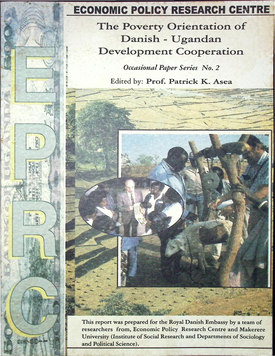
The Poverty Orientation of Danish- Ugandan Development Cooperation
Authors/Editors: Prof. Patrick Asea
Abstract:
The Danish-Uganda development cooperation subscribes to the international goal of reducing poverty by half by 2015. Danish support has recognized that project interventions alone are unlikely to solve the problem of poverty reduction. As such, a sector-wide approach that channels budgetary funds and institutional support through key ministries is a hallmark of Danish development cooperation. This study found that 60% of sampled Danish interventions had clear direct linkages with poverty reduction. However, interventions do not always have to be poverty-focused to benefit the poor. Many Danish projects have helped create an enabling environment for broad-based growth, strengthened governance systems, and increased food security. All such interventions are likely to benefit both the poor and the non-poor. Interventions targeted directly at the poor have had the most impact but appear to benefit fewer people than less targeted projects. Danish support to basic education and reproductive and preventative health services (usually more accessible to the poor) has been modest or non-existent. Danish support to agriculture is the most comprehensive but does not directly target the poorest of the poor because it is oriented towards smallholders (who are not necessarily poor). Danish support for roads and water has made important strides in improving availability and access to infrastructure. However, the infrastructure sector support could benefit from mechanisms to ensure that the poor benefit substantially and swiftly. Danish cooperation acknowledges that sustainable poverty reduction depends not just on investments but on the empowerment of the poor. Danish support has been directed towards government agencies involved in ensuring good governance and accountability. In the future, support for democracy and good governance should be directed less towards direct support for the electoral process and more towards increasing overall governance capacity and accountab
DETAILS
Pub Date: January 1996
Document N0.:
Volume:
Published By:
Economic Policy Research Centre